A missed call is not automatically a lost customer. Some people leave a voicemail; some try again. But if the caller needs a plumber, a table, an appointment or a quote today, the next number in the search results is very easy to tap.
The useful number is not how many calls you miss. It is the value of the work that disappears because nobody could answer.
A simple way to calculate it
Use one ordinary month. You do not need perfect data; a sensible estimate is better than guessing that every missed call was worthless or that every one was a guaranteed sale.
For example, suppose a business misses 20 genuine enquiries in a month. If one in four would have booked and the average job contributes £120 before overheads, the likely missed gross profit is:
20 × 25% × £120 = £600
That is not a promise that answering every call creates £600. It is a useful ceiling for deciding whether better call handling is worth £20, £80 or several hundred pounds a month.
Separate the calls before counting them
Do not include every unanswered ring. Split the list into:
- new enquiries — potential work or bookings;
- existing customers — updates, changes and support;
- suppliers and staff — operational calls;
- spam and sales calls; and
- calls outside the hours you actually promise.
The first group has the clearest direct value. The second may matter just as much for retention and reputation, but it should not be counted as a brand-new sale.
Track one week before buying anything
For seven days, note the time, the caller if known, whether they left a message, how long it took to call back, and what happened. Your phone provider may already show unanswered calls and times.
Look for a pattern:
- calls while hands are busy on site;
- a lunch-time cluster;
- evening enquiries after the office closes;
- several calls arriving at once; or
- calls that could have been answered by a booking link or a clearer website.
The pattern tells you which fix to buy. A receptionist is wasteful if the real problem is that nobody can find your opening hours. A booking page is not enough if callers need to describe an emergency.
The options, from simplest to most involved
1. Make voicemail useful
Say the business name, when you return calls and what the caller should leave. Keep it short. “Leave your name, number and postcode; we return calls by 6pm” is better than a long list of services.
2. Send an automatic text
A missed-call text can say that you are working, confirm when you will respond and link to booking or quote information. It reassures the caller without pretending somebody is available.
3. Use call routing
A cloud phone system can ring the office, then a mobile, then voicemail. Teams can share a business number without publishing personal mobiles. Time rules send evening calls somewhere different from daytime calls.
4. Use a human answering service
A good choice when callers need judgement, reassurance or detailed triage. It usually costs more, and the service needs a clear brief to avoid promising work you cannot take.
5. Use an AI Receptionist
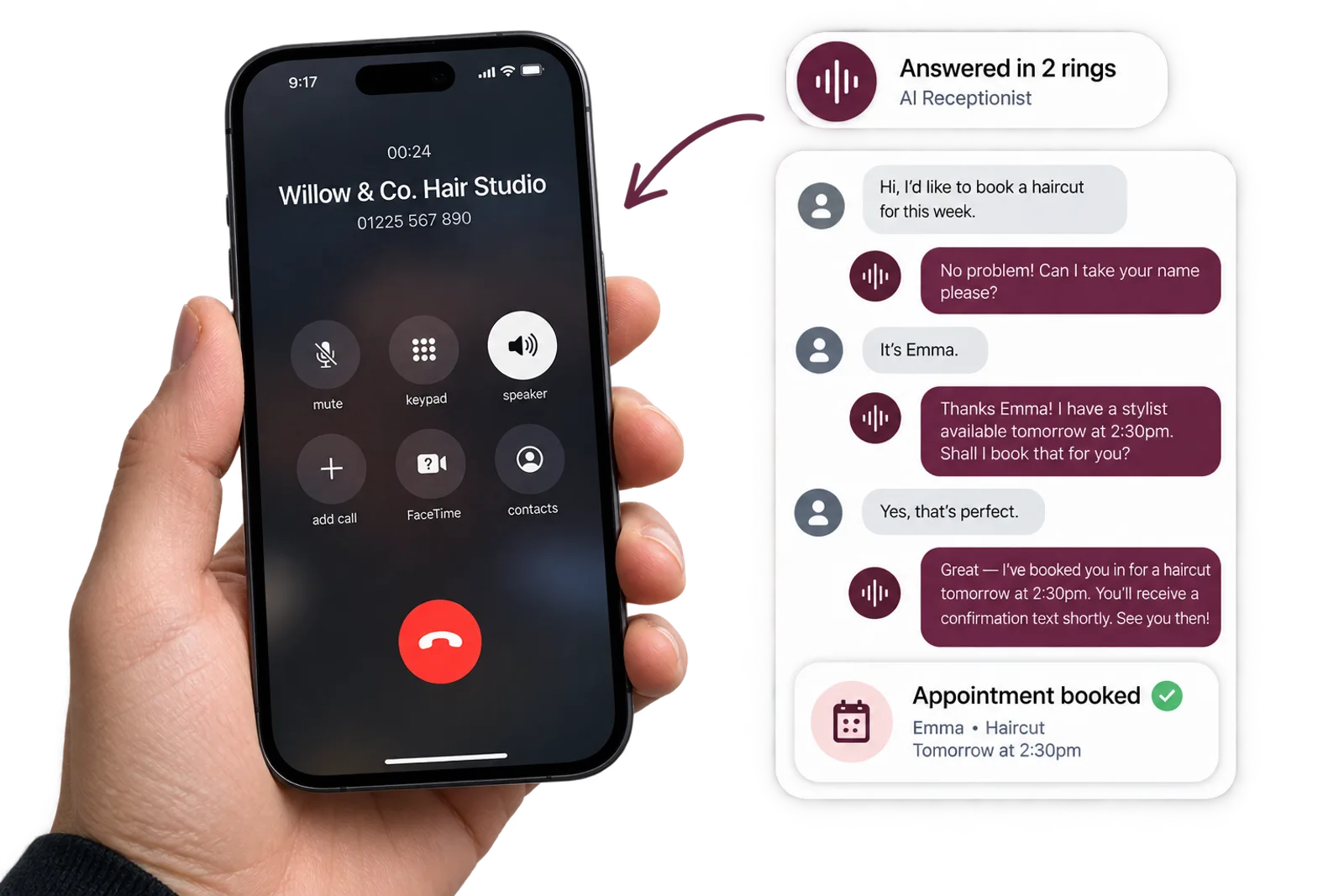
An AI Receptionist can answer routine questions, collect the job details, book within agreed rules and send a summary. It should identify itself as automated, stay inside an approved script and hand over when uncertain. It is not a good fit for every conversation.
What should the answerer know?
Whether it is a person or software, write down:
- the areas and types of work you accept;
- opening and emergency hours;
- what counts as urgent;
- prices it may quote;
- dates or availability it may promise;
- questions needed for a useful callback; and
- subjects that must always be passed to you.
This brief is often more valuable than the technology. It makes every answer more consistent.
Measure the result
After a month, compare the number of captured enquiries, qualified bookings and unwanted calls with the old week. Read the summaries. Check that customers were told when a human would respond. If the system creates lots of poor leads or wrong promises, change the script rather than celebrating a high call count.
Let the phone answer while you work
A receptionist built around your rules.
Our AI Receptionist has a £100 setup, then plans from £20 a month. It says it is automated, takes the details you choose and sends a tidy summary after each call.